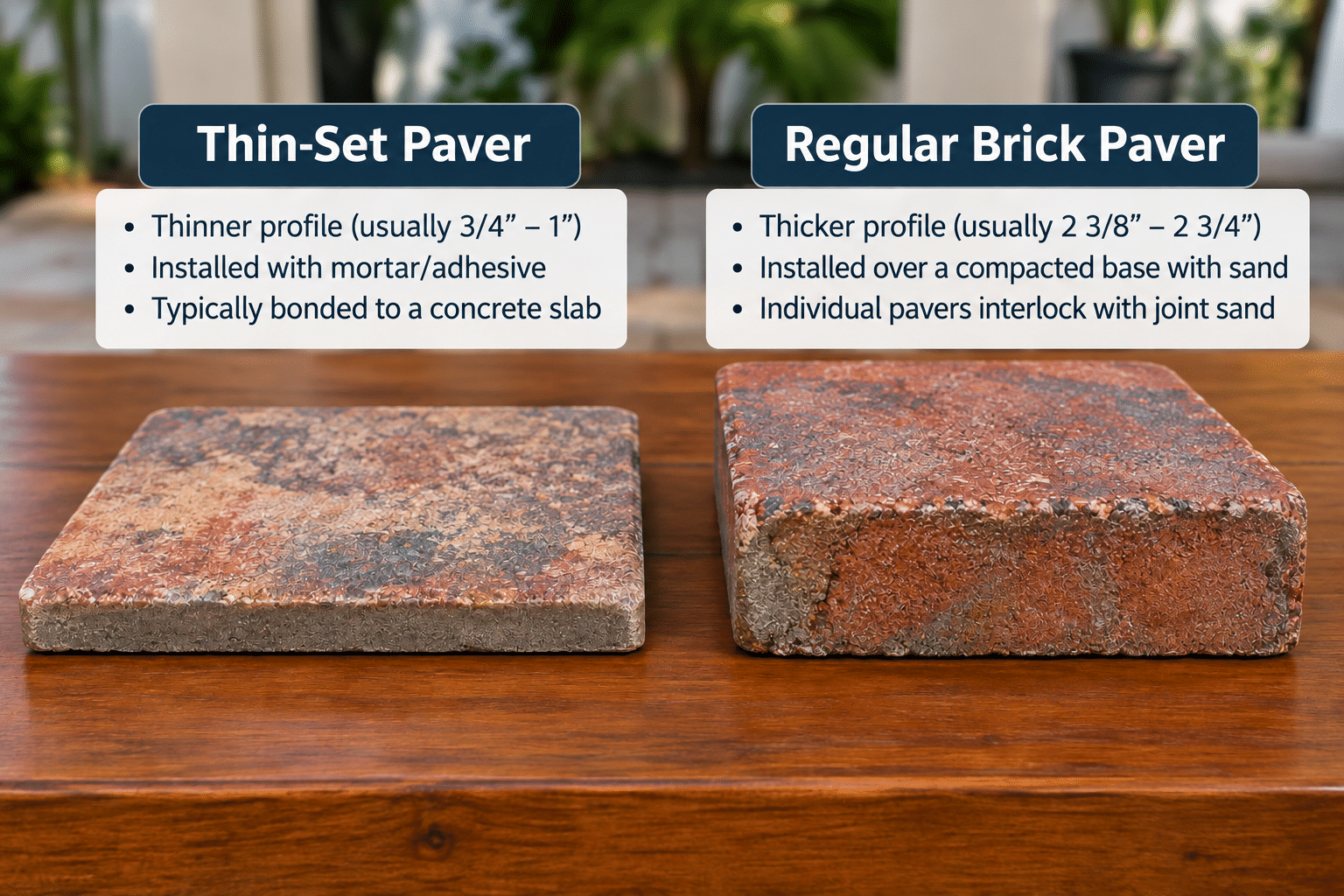
Not all pavers are created equal, and understanding the difference between thin-set pavers and traditional brick pavers is important when it comes to cleaning, maintaining, and sealing your outdoor surfaces.
At Hoover Pressure Cleaning, we believe the best results start with understanding the surface we’re working on. Choosing the right cleaning and sealing approach helps protect your investment and maintain the appearance of your patio, pool deck, or driveway.
What Are Thin-Set Pavers?
Thin-set pavers are typically thinner paving materials installed over a solid, stable surface, such as an existing concrete slab. Rather than relying on a traditional compacted base with individual pavers, thin-set installations generally use a mortar or adhesive to bond the pavers to the underlying surface.
These installations are often found on patios, pool decks, walkways, and outdoor living areas where a homeowner wants the appearance of pavers without the height or construction requirements of a traditional paver system.
Because thin-set pavers are bonded to a solid base, their maintenance needs can differ significantly from those of traditional brick pavers.
What Are Traditional Brick Pavers?
Traditional brick pavers, including many concrete pavers designed to resemble brick, are commonly installed over a compacted base of aggregate and a bedding layer of sand.
The individual pavers fit together in an interlocking pattern, with joint sand filling the spaces between them. This flexible installation allows the surface to accommodate some movement and minor changes in the underlying ground without necessarily cracking.
Traditional brick pavers are popular for driveways, patios, pool decks, and walkways because they offer durability, versatility, and the ability to replace individual pavers if needed.
Why the Difference Matters for Sealing
The biggest difference is how the pavers are installed and what lies beneath them.
With thin-set pavers, the adhesive or mortar bond and the condition of the underlying concrete are important considerations. Sealer selection must account for the specific paver material, its porosity, and whether the installation can tolerate a film-forming product. Moisture trapped beneath the surface can contribute to cloudy or discolored sealer, particularly when the material is not sufficiently dry before application.
With traditional brick pavers, the joints and bedding system are just as important as the paver surface itself. Cleaning and sealing must be performed carefully to avoid unnecessarily removing joint sand or destabilizing the installation. Some sealing systems are also designed to help stabilize compatible joint sand, but the correct product and application method depend on the paver and sand type.
In either case, applying sealer without properly preparing the surface can lead to disappointing results. Dirt, algae, old sealer residue, and excess moisture can interfere with proper penetration or bonding, potentially resulting in cloudy areas, peeling, or uneven appearance.
Why Professional Cleaning and Preparation Matter
Before sealing any paver surface, it is important to identify the material, understand how it was installed, and determine whether an existing sealer needs to be removed.
A thorough cleaning removes contaminants that can interfere with the sealing process. However, the cleaning method must also be appropriate for the surface. Excessive pressure can damage softer materials, remove joint sand, or affect the stability of an installation.
Drying is equally important. Even when the surface looks dry, moisture may remain within the pavers or beneath them. Sealing too soon can trap moisture and compromise the finished appearance.
At Hoover Pressure Cleaning, we take the time to evaluate the surface and prepare it properly before sealing. Our goal is not simply to make pavers look clean today, but to help homeowners protect their outdoor spaces for the long term.
Protect Your Pavers With the Right Approach
Whether you have thin-set pavers bonded to a concrete slab or traditional brick pavers installed over a compacted base, the right sealing approach begins with understanding your particular installation.
Proper cleaning, appropriate drying time, and selecting a compatible sealer all play a role in achieving a durable, attractive finish.
If you’re considering sealing your patio, pool deck, driveway, or walkway, Hoover Pressure Cleaning can help you determine the right approach for your pavers.
Hoover Pressure Cleaning — The Plant Friendly People
Serving Sarasota, Manatee, Lee, and Charlotte counties.