
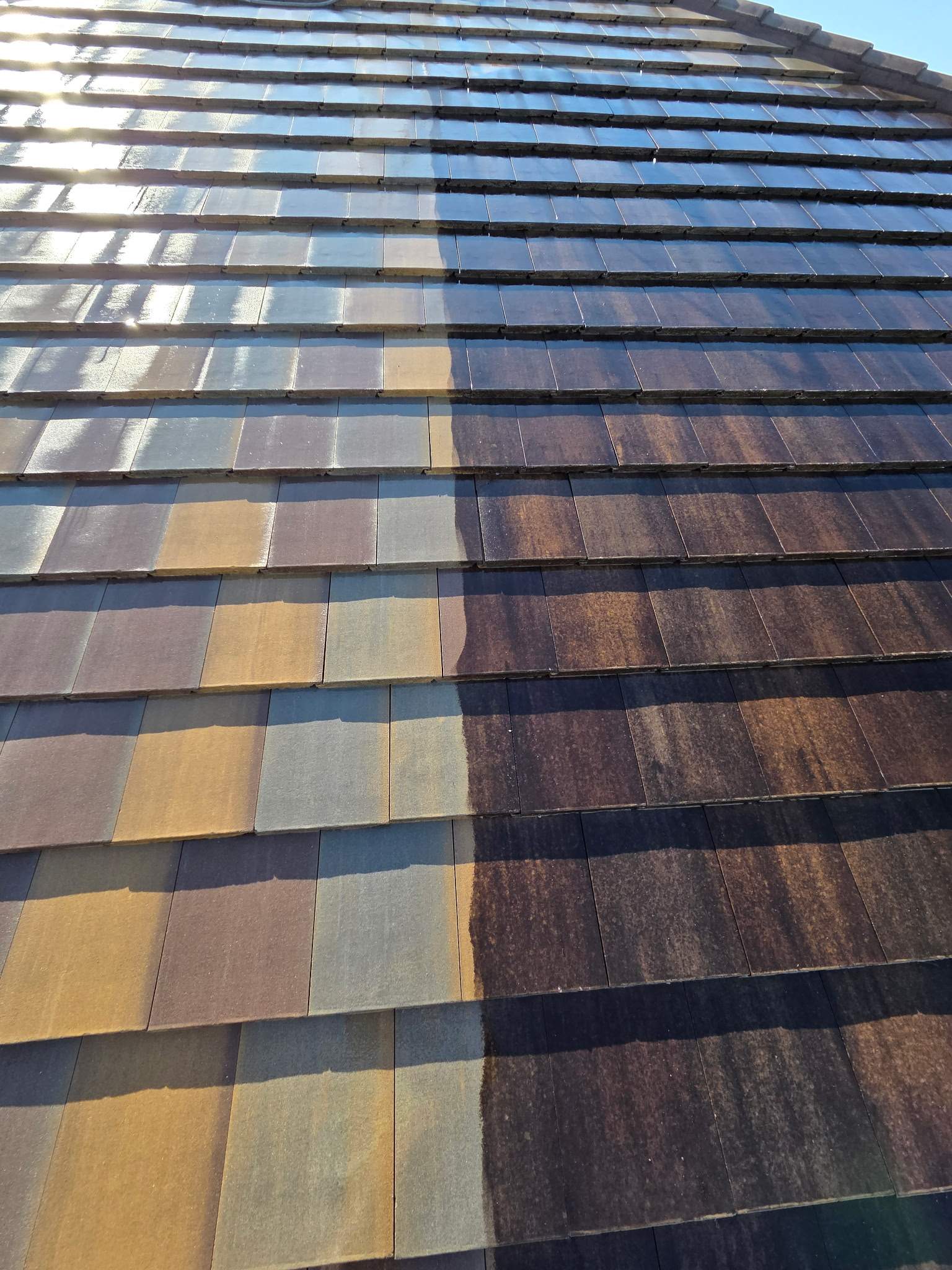
If you’ve noticed white, chalky patches or lighter areas on your concrete tile roof, you’re not alone—and in most cases, it’s not something to worry about.
This common condition is called efflorescence, and it’s a natural process that happens with concrete roofing materials.
What Is Efflorescence?
Efflorescence appears as a white, chalky film or lightened areas on concrete roof tiles. It happens because concrete contains small amounts of natural lime. When moisture moves through the tile, it brings that lime to the surface. As it reacts with carbon dioxide in the air, it forms a harmless crystalline deposit.
This process can occur on all concrete products, including sidewalks, pavers, block walls, and masonry—not just roofs.
Does Efflorescence Mean the Roof Was Damaged?
No. Efflorescence is cosmetic only and does not affect the structural integrity, durability, or performance of the roof tiles.
It does not weaken the tile, shorten the life of the roof, or create leaks. It simply changes the appearance temporarily.
Will the White Residue Go Away?
Yes. In many cases, efflorescence fades over time as rainwater and exposure to the atmosphere naturally wash the residue away and allow the original color to return.
Because this is part of the normal curing process of concrete materials, it often resolves on its own without intervention.
Can Roof Cleaning Cause Efflorescence?
No. Efflorescence is not caused by roof cleaning. It actually starts inside the concrete tile itself, not on the surface.
Concrete tiles naturally contain lime. When moisture moves through the tile—from rain, humidity, or normal weather exposure—that lime can travel to the surface and leave behind a white, chalky appearance as it dries. This can happen whether the roof has been cleaned or not.
Sometimes, after a roof is cleaned, the white areas become easier to see. That’s because the dirt and algae that were covering the tile are gone—not because the cleaning created the whitening.
Think of it like washing a dusty car: the marks were already there, they just weren’t visible until the surface was clean.
What Do Roof Manufacturers Say About It?
Eagle Roofing Products explains the process clearly in their article:
What is Efflorescence and How It Affects Your Concrete Tile Roof
https://eagleroofing.com/2017/05/efflorescence-affects-concrete-tile-roof/
They note that efflorescence is a natural reaction in cement-based materials and does not impact the strength or function of the roof.
Our Approach at Hoover Pressure Cleaning
At Hoover Pressure Cleaning, we follow manufacturer-recommended cleaning methods designed specifically for concrete tile roofs. Our goal is always to safely remove organic growth like algae and mildew—without damaging the roofing material.
If you ever notice whitening or color variation after a cleaning, don’t be worried, it’s likely efflorescence and the color of your tile has not been removed, but the efflorescence bloom has made it appear lighter than you remember. Most of the time, it’s simply part of the normal life cycle of a concrete tile roof.